
Wheel catalogue / LeaperKim (Veteran)
Veteran Lynx 2700Wh (50S)
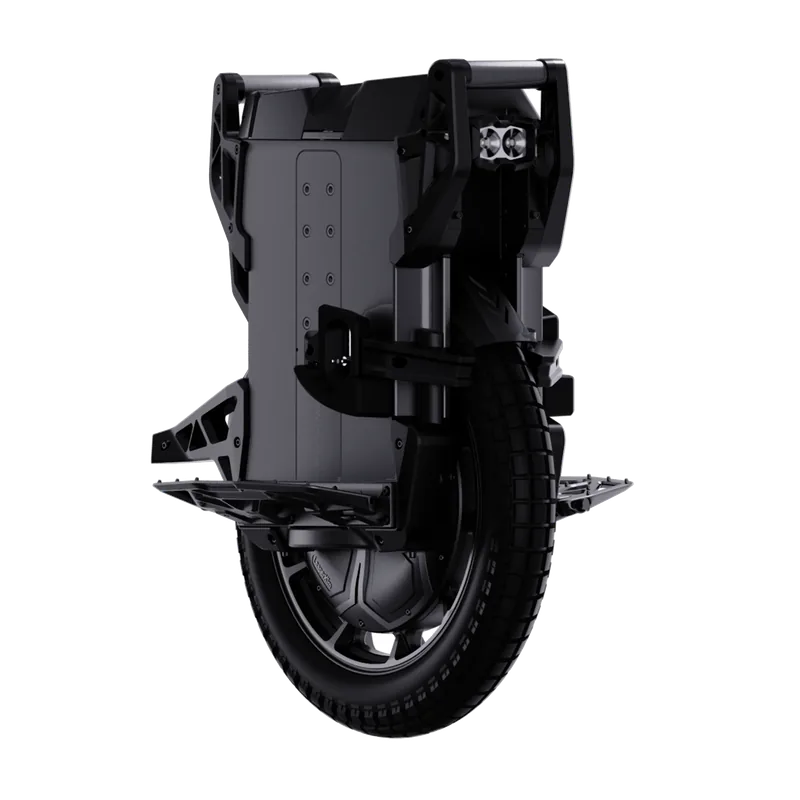
Photo: LeaperKim
Plate figures
The manufacturer’s numbers, unverified by us. The rated top speed especially: it rarely matches what the wheel will actually do.
- Capacity, Wh
- 2700
- Voltage, V
- 151.2
- Rated power, W
- 3200
- Tyre, inches
- 20
- Rated speed, km/h
- 90
- Weight, kg
- 40
- Pack layout
- 36s4p
Support in LoEUC
Firmware reversed
- Telemetry: speed, current, voltage, temperature, distance
- Per-cell BMS: every cell voltage and the pack temperatures
- Exact state of charge — this model’s pack is in the catalogue rather than guessed from voltage
- Reading and writing the wheel’s settings
- Quick actions: headlight and horn
- Firmware flashing from the app
From the firmware
Hardware code 0050, images examined: 8.
| Builds | Ka | Kg | Kc | Kx |
|---|---|---|---|---|
| 005.0.13, 005.0.12, 005.0.11, 005.0.09, 005.0.07, 005.0.06, 005.0.05, 005.0.04 | 4180 | 1120 | 200 | 40 |
Balance-loop gains at the firmware’s own default pedal hardness (180 of a 100–200 range). Ka is the angle term, Kg the rate term, Kc the current term, Kx the acceleration term. Those are the firmware’s own names — its diagnostic printer labels them exactly so. Torque is (Ka·error + Kg·rate + Kc·current + Kx·accel) / 1024, clamped to a ceiling.
What these numbers are, briefly
An electric unicycle solves one problem about five hundred times a second: keep you from falling. It looks at how the pedals are tilted and asks the motor for torque — the effort with which the wheel pushes forward or back underneath you. The formula below is that whole decision, and the four gains give it its character.
torque = (Ka·error + Kg·rate + Kc·current + Kx·accel) / 1024, then clamped to the ceiling
“Error” is not a fault, it is a deviation: how far the pedals are tilted from the angle the firmware considers correct. Lean your toes forward and an error appears, so the wheel drives forward to cancel it. Ease off and the error goes to zero and the wheel stops accelerating.
“Rate” is not your road speed but how fast the pedals are tipping. That term is the damper: the quicker the angle runs away, the harder the wheel pushes back. Without it the machine would wallow like a car with dead shock absorbers.
“Current” is how hard the motor is pulling right now. It tells the wheel how expensive the present effort is: high uphill and under acceleration, near zero when coasting.
“Acceleration” comes from the accelerometer: it feels a jolt or a drop before it has had time to turn the pedals.
Ka is how much torque the wheel gives per degree of tilt. This is pedal stiffness itself: higher means firmer, more responsive pedals with a definite floor under your toes; lower means softer and vaguer, the wheel sinking more willingly under pressure.
Kg is how hard the wheel damps its own oscillation. On its own the number says little; the ratio of Ka to Kg says a lot. The higher it is, the more nervous the machine — sharper to respond, slower to settle. On the Lynx-S the 9.0.4 update took that ratio from 5.9 to 8.6, which is exactly why its pedals “got angrier”.
The ceiling is the torque limit the wheel will not exceed however hard you lean. You meet it under hard acceleration and on steep climbs, and it also drops as the power stage heats up.
One limit matters most: these numbers cannot be compared across brands. Every firmware has its own units of angle and torque, so “this one’s Ka is twice as large” means nothing between manufacturers. Within one brand and one family, it means everything.